
The physical effects of stress are real―you can read about chronic inflammation and our biological response to stress on the “Fight, Flight, Freeze” page. In the wake of your body having an FFF response, or at any moment where less stress is the goal, self-regulation, or self-soothing, can help manage stress by slowing your heart rate and bringing your breathing back to a stable rhythm. Having an awareness of what our nervous system and body are “saying” allows us to “get ahead” of our stress reactions–such as yelling–and helps us cope with the issue at hand.
In addition to benefiting our health, our own self-regulation can benefit students and children. Children are “emotional sponges”―they absorb and feel a caregiver’s stress, even if they are the cause of the stress. “Matching” a child’s overwhelming emotions (by yelling or punishing) does not always work.
Checking in with our stress levels and using self-soothing techniques engages our parasympathetic nervous system, also known as the “rest and digest system.” Developing self-soothing skills can foster lifelong health habits in young people and adults, helping to enhance the quality of life. Daily check-in rituals with students help to build self-awareness and self-regulation skills.
So let’s check-in and see how we are doing! Below, we will take you through how to use the CIS Mindset Map, or you can connect with a CIS counselor directly to learn more about self-regulation and our various tools for managing stress.
Mindset Map
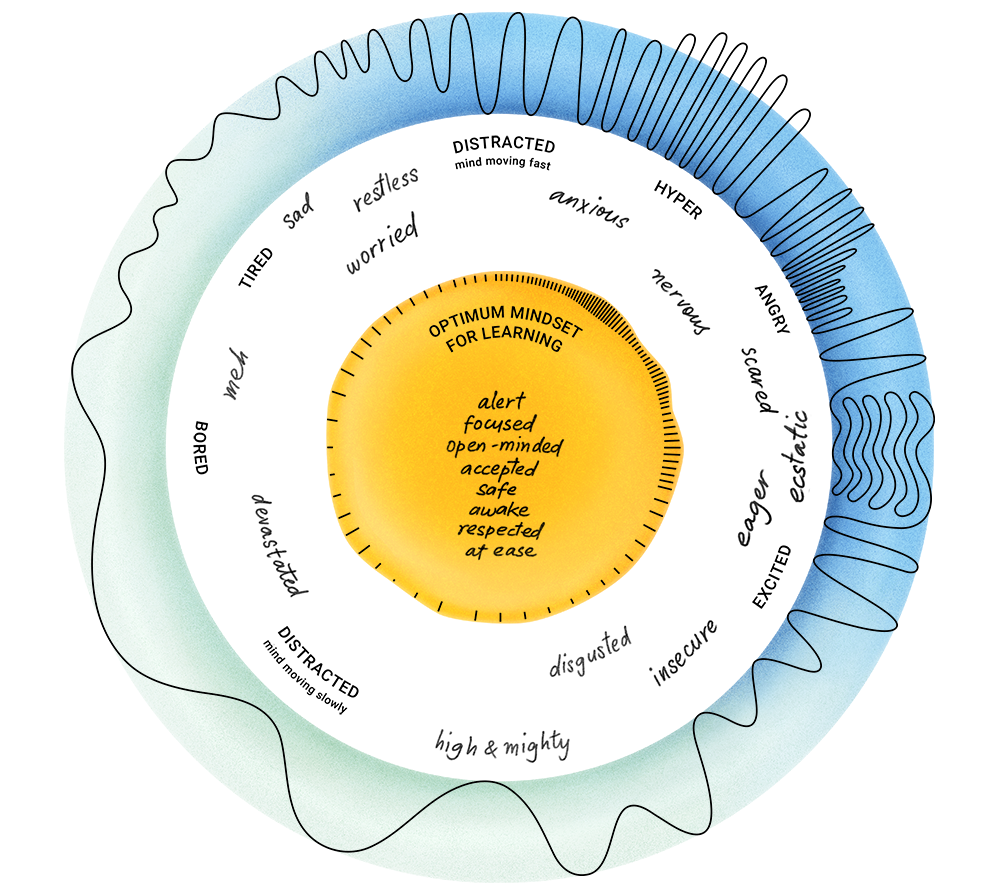
We developed the Mindset Map as a customizable check-in tool that helps individuals and groups define and connect with their unique Optimum Mindset for Learning. You decide (with students) what your Optimum Mindset feelings are, and then identify the high- and low- energy feelings that pull you away from your Optimum Mindset.
The Why and How
As a check-in tool, the Mindset Map can be a ritual to start the day as a reminder of our learning goals or be used at specific times when Optimum Mindset appears to be absent from a learning environment.
The Mindset Map is designed to help you gain an understanding of how you (and your students) want to feel while learning and explore that next to what else is being felt in a particular moment. It can also help identify the type of self-regulating activity you might need – e.g. an energizer vs. a moment of mindfulness – so we can access our Optimum Mindset.
This tool is based on the fact human beings have the ability to feel and express a broad range of emotions, often more than one at a time. It is also rooted in the principle that simply naming our feelings can unlock our ability to manage those feelings or shift towards other more desirable feelings.
Example Mindset Map
Notice the movement of the line around the circle; it represents the pace of thoughts and/or heart rate when feeling different emotions. The Mindset Map displays both high-energy and low-energy feelings that pull us away from Optimum Mindset.
Pro Tips
- Using colloquial words or current slang to describe feelings–e.g. scatter-brained, blah, whatevs–personalizes the tool and can help people feel more represented and invested.
- Hang your filled-in map prominently in class and set aside time to ask students to place themselves within the map. You can also refresh words and phrases periodically.
Visit our Activity Corner to view and download the complete Mindset Map activity as well as a template to build your own.